
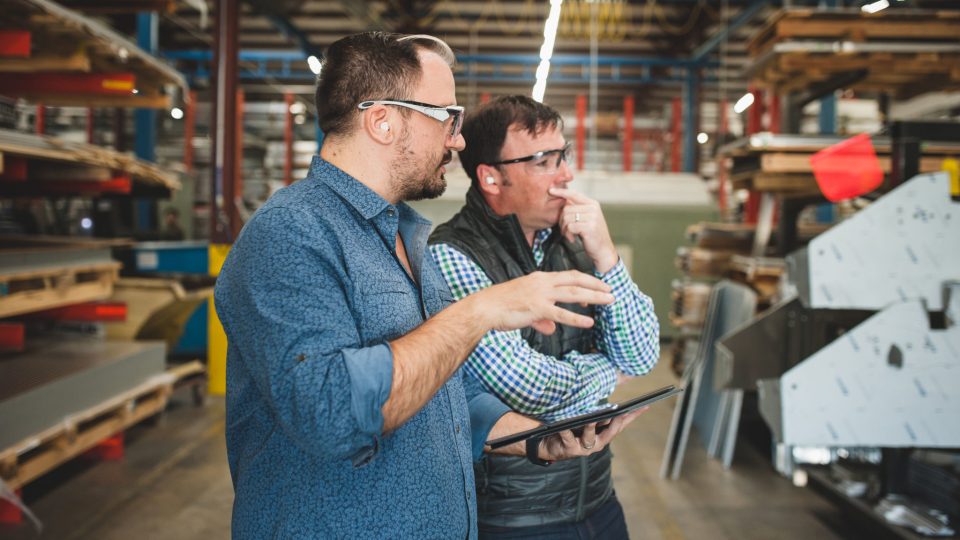
If you’ve outgrown your workshop, moving into a factory gives you the extra space you need to increase production. That might mean adding another machine, separating packing from assembly or keeping materials nearer to where they’re used. It’s also a chance to ask the people doing the work what they would change about the space they have now.
Choosing a ready to use factory means you can view the space and plan around an existing building. Some changes may still be needed for your production process, such as extra electrical capacity or ventilation. Taking your equipment requirements along to a viewing makes those conversations much more useful.
Plan the space with your team
Your production team can tell you quite a lot about what belongs where. They know which materials they fetch repeatedly, where partly finished work tends to collect and what makes packing an order awkward. Even a small change can be worthwhile when it saves someone the same walk several times a day. Have that conversation before you settle on the new layout, while any changes are still easy to make on paper.
A simple drawing can follow an order from the arrival of its materials through production, inspection and packing. Seeing that route laid out helps you decide which activities need to be close together. You can then compare it with the building’s doors, columns and loading areas, and talk through the options with whoever will be installing your machinery.
The equipment itself needs room around it for people to work and for servicing. If you expect to add another machine, include that in the drawing too. Empty space may feel generous when you first move in, but it’s easier to plan the next addition now than to rearrange established work areas later.
If the new site is some distance from your workshop, discuss the journey to work with staff. They may need time to work out transport arrangements before the move.
Make time for the changeover
The moving budget needs to cover more than transport and the new rent. Equipment may need disconnecting and reinstalling, and the building may need alterations before it can accommodate your process. Get those jobs priced and scheduled alongside the move itself. That gives you a more realistic opening date to discuss with staff and customers.
If orders need to continue during the move, talk through which work can be finished ahead and which equipment must remain available until the last stage. Moving in phases may be possible, depending on how your production works. The people who schedule jobs and purchase materials should be involved, since their decisions will affect what’s needed at each site.
Allow time for trial production once the equipment is installed. A familiar product is a sensible place to start, because your team already knows how it should turn out. Follow that first batch through the new layout and ask the operators what they notice. They may spot that tools are too far from a workstation or that finished goods need a better place to wait before packing.
